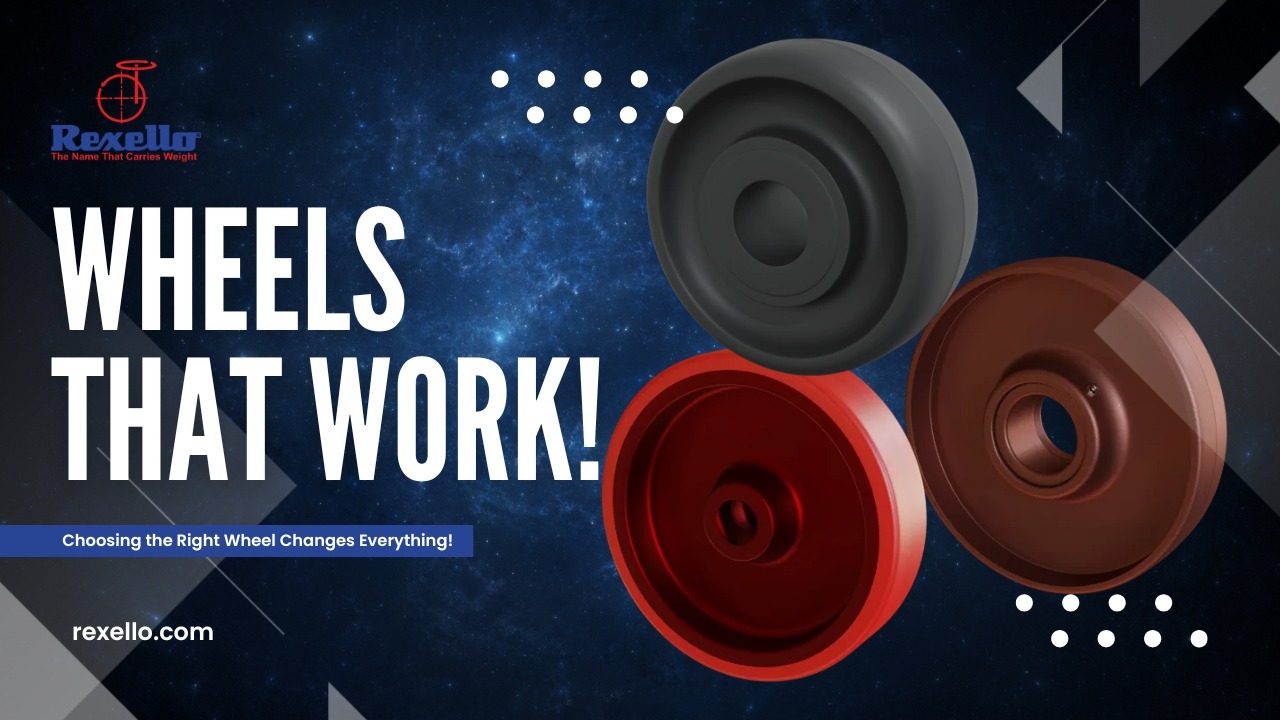
Ever considered the critical role of a castor wheel? Often overlooked, this seemingly small component is the backbone of seamless operations across diverse sectors, from high-volume warehouses and critical healthcare facilities to bustling manufacturing plants and dynamic office environments. A well-considered choice can dramatically enhance efficiency, bolster safety, and extend equipment longevity.
Conversely, a poor selection can lead to significant challenges, including safety hazards, frequent equipment downtime, and escalating operational costs. Picture a hospital gurney struggling to navigate a hallway, or a heavily loaded manufacturing trolley grinding to a halt. These aren't minor inconveniences; they represent costly disruptions that directly affect productivity and profitability. The key lies in understanding the nuanced interaction between castor wheels and their operational environment.
So, how do you navigate this essential decision and ensure your equipment moves with optimal performance? Let's delve into the core considerations.
Calculating Load Capacity: Beyond the Static Weight
The foundational step in castor selection is accurately determining load capacity. Every castor is engineered with a specific weight limit, and exceeding it inevitably leads to premature wear, damage to the castor, and potential harm to the equipment it supports.
It's crucial to account for more than just static load; consider the dynamic forces exerted during movement, such as impacts from sudden stops, rapid directional changes, and uneven surfaces. A pragmatic approach involves dividing the total equipment and load weight by the number of castors, then adding a prudent safety margin to absorb these dynamic stresses.
Material Matters: Matching Wheels to Your Terrain
The material composition of a castor wheel is a pivotal factor dictating its performance across various floor surfaces and under different load conditions.
Polyurethane (PU) wheels: Ideal for smooth, indoor surfaces. These wheels offer quiet operation, excellent durability, and are gentle on floors, making them suitable for environments requiring low noise and floor protection.
Rubber wheels: Excellent for shock absorption, rubber castors perform well on uneven or rough terrains, providing a cushioned ride that protects sensitive equipment and reduces vibration.
Nylon or Phenolic wheels: Engineered for high-load applications, these robust wheels are designed to bear significant weight. However, their hardness necessitates careful consideration for softer flooring types, where they may cause damage if not appropriately specified.
Thermoplastic Rubber (TPR) wheels: Offering a versatile middle ground, TPR wheels combine the gentleness required for indoor use with sufficient durability for light industrial settings, providing a balanced performance profile.
Flooring Dynamics: A Critical Consideration
Your flooring type significantly influences castor performance and longevity.
Hard floors (e.g., concrete, tiles): Softer wheel materials like rubber or polyurethane are recommended. They provide superior grip, minimize noise, and reduce wear on both the wheels and the floor surface.
Carpeted or uneven outdoor terrains: Tougher wheel materials such as nylon are generally preferred. Their enhanced wear resistance and stability are crucial for navigating challenging and abrasive surfaces effectively.
Environmental Resilience: Protecting Against the Elements
Consider the operational environment. Will the castors be exposed to corrosive chemicals, excessive moisture, or extreme temperatures? Such conditions can rapidly degrade unsuitable materials. In environments like chemical plants or food processing facilities, stainless steel castors or those with specialized protective coatings become essential to ensure longevity and maintain operational integrity.
Castor Types: Optimizing Maneuverability and Safety
Beyond material, the type of castor significantly impacts equipment maneuverability and safety
Fixed castors: Designed for straight-line movement, these are ideal for applications requiring directional stability.
Swivel castors: Providing 360-degree rotation, swivel castors enable superior maneuverability, making them indispensable for navigating tight spaces and complex layouts. Many systems benefit from a strategic combination of both fixed and swivel castors.
Brakes and locking mechanisms: An essential safety feature, particularly on sloped surfaces or for mobile workstations, these mechanisms prevent unintended movement, enhancing workplace safety.
A Strategic Checklist for Castor Selection
Before finalizing your decision, consider these key questions:
What is the total maximum weight the castors will support (including dynamic forces)?
What is the condition and type of flooring in the operational area?
Will the equipment primarily be used indoors or outdoors?
Are there any environmental challenges such as moisture, extreme temperatures, or corrosive chemicals?
What is the frequency and intensity of movement for the equipment?
Avoiding Common Pitfalls: The Value Proposition
A frequent mistake is prioritizing initial cost over comprehensive technical specifications. For instance, deploying hard plastic wheels on a concrete surface can lead to a jarring ride, generating vibrations that could damage equipment. Similarly, using standard rubber wheels outdoors may result in rapid wear due to environmental exposure and increased friction.
The principle is clear: always align the castor wheel with its intended environment, load, and usage frequency.
Conclusion
Choosing the right castor wheel is not a last-minute detail but a strategic investment. With expert guidance and a thorough understanding of materials, load capacity, and operational conditions, businesses can ensure smooth operations, significantly reduce maintenance costs, and enhance overall productivity.
In conclusion, the correct castor wheel selection is fundamental to optimizing movement, fostering a safer work environment, and delivering substantial long-term operational benefits. By meticulously evaluating load, flooring, environmental factors, and mobility requirements, you make a seemingly small decision that yields significant, positive impacts on your business's efficiency and bottom line.