Why Castor Wheel Failures Impact Industrial Operations
Castor wheels are a foundational component of industrial mobility systems, enabling the smooth and efficient movement of heavy loads across manufacturing plants, warehouses, hospitals, and logistics facilities. From material handling trolleys to automated equipment bases, castors directly influence operational efficiency, worker safety, and equipment lifespan. When castor wheels fail, the consequences are immediate and often costly, resulting in unplanned downtime, workflow disruptions, and potential safety hazards for operators.
In high-load environments, even a single wheel failure can halt an entire process line, especially in industries where movement is continuous and time-sensitive. Damaged wheels can cause instability in equipment, increase manual effort, and lead to misalignment of transported goods. Over time, this impacts productivity and can escalate into larger operational inefficiencies. Businesses often underestimate how critical reliable mobility systems are until repeated failures begin affecting delivery timelines and maintenance budgets.
Industrial environments are inherently demanding, exposing castor wheels to heavy loads, shock impacts, uneven flooring, and continuous motion cycles. Without the right combination of design, material, and engineering, wheels tend to wear out faster than expected. This is where high-performance solutions like heavy duty polyurethane castor wheels, industrial nylon castor wheels, rubber castor wheels for smooth movement, and cast iron castor wheels for high load applications become essential for ensuring durability and long-term performance. At Rexello, castor wheels are engineered to handle these challenges with precision manufacturing, load-tested components, and application-specific designs. By addressing common failure points proactively, businesses can reduce downtime, enhance operational safety, and extend the life of their mobility systems across demanding industrial applications.
Overloading and Load Imbalance

Overloading remains one of the most critical and frequently overlooked causes of castor wheel failure in industrial operations. Every castor wheel is designed with a specific load-bearing capacity, and exceeding this limit places excessive stress on structural components such as the wheel core, bearings, axle, and mounting brackets. When subjected to continuous overload conditions, these components begin to deform, leading to cracks, bending, or sudden breakage during operation.
The issue becomes more severe when load distribution is uneven. In many industrial setups, weight is not always perfectly balanced across all castors. This creates load concentration on specific wheels, causing accelerated wear and increasing the likelihood of premature failure. Over time, even high-quality wheels can fail if they consistently bear disproportionate loads, resulting in unstable equipment movement and higher maintenance requirements.
Improper load planning also affects maneuverability. Overloaded castors increase rolling resistance, making it harder for operators to move equipment efficiently. This not only reduces productivity but also increases physical strain on workers, raising workplace safety concerns. Selecting the right castor configuration is therefore essential to maintaining both operational efficiency and ergonomic safety.
To address these challenges, Rexello provides engineered solutions such as heavy duty castor wheels for industrial trolleys, double bearing castor wheels for load distribution, plate mounted castor wheels for stability, and swivel castor wheels with high load capacity. These products are designed to handle demanding load conditions while ensuring smooth movement and structural reliability.
By accurately calculating operational loads, factoring in dynamic forces, and ensuring even distribution across all wheels, businesses can significantly reduce failure risks. Investing in properly rated castor wheels not only prevents breakdowns but also ensures long-term performance and safety across industrial applications.
Excessive Wear Due to Incorrect Wheel Material
Selecting the appropriate wheel material is one of the most critical decisions in ensuring long-term castor wheel performance. Industrial environments vary significantly in terms of surface conditions, chemical exposure, temperature fluctuations, and load intensity. When the wrong material is used, castor wheels experience excessive wear, leading to reduced efficiency, frequent replacements, and increased operational costs. For instance, softer materials may wear quickly on rough or abrasive surfaces, while harder materials may damage delicate flooring or fail to provide the required grip. Exposure to oils, chemicals, or high temperatures can further degrade certain materials, causing cracking, hardening, or loss of structural integrity. Over time, this mismatch between material and environment leads to performance issues such as increased rolling resistance, noise, vibration, and reduced load-bearing capability.
Incorrect material selection also impacts operational safety. Worn-out wheels can become unstable, increasing the risk of tipping or sudden failure during movement. In high-speed or high-load applications, this can lead to equipment damage or workplace accidents. Additionally, frequent replacements disrupt workflows and add to maintenance overhead, making it essential to choose materials that align with operational demands.
Rexello addresses this challenge by offering a wide range of application-specific solutions, including polyurethane castor wheels for abrasion resistance, nylon castor wheels for high strength applications, rubber castor wheels for noise reduction, and iron castor wheels for extreme load conditions. Each material is engineered to perform optimally under specific industrial conditions, ensuring durability and consistent performance. By selecting the correct material based on floor type, load capacity, and environmental factors, businesses can significantly extend wheel life, improve movement efficiency, and reduce long-term maintenance costs. Proper material selection is not just a technical decision—it is a strategic investment in operational reliability.
Bearing Failure and Reduced Mobility
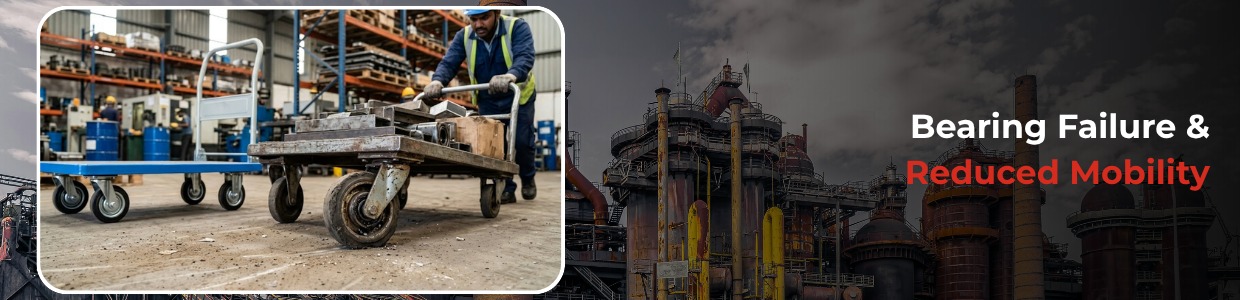
Bearings are a critical component in castor wheel assemblies, directly responsible for enabling smooth and efficient movement under load. In industrial environments where equipment is constantly in motion, bearings endure continuous stress, high loads, and exposure to contaminants such as dust, debris, and chemicals. When bearings begin to fail, the first noticeable impact is increased rolling resistance, making it harder to move trolleys and equipment efficiently. This not only slows down operations but also increases manual effort, leading to operator fatigue and reduced productivity.
One of the primary causes of bearing failure is contamination. Foreign particles entering the bearing system can cause abrasion, leading to uneven rotation and eventual seizure. Inadequate load capacity is another common issue—when bearings are not designed to handle the operational load, they degrade faster under pressure. Additionally, lack of routine inspection and lubrication accelerates wear, resulting in noise, vibration, and inconsistent movement across industrial floors.
As bearing performance declines, the entire mobility system is affected. Equipment becomes harder to maneuver, alignment issues may arise, and additional strain is placed on other components such as wheels and mounting structures. This cascading effect increases maintenance frequency and operational downtime, making bearing reliability a key factor in long-term performance.
Rexello addresses these challenges with precision-engineered solutions such as double ball bearing castor wheels for smooth rotation, heavy duty swivel castor wheels with high-performance bearings, industrial castor wheels for continuous movement applications, and plate mounted castor wheels with reinforced bearing housing. These designs ensure consistent performance even under demanding industrial conditions.
By selecting the right bearing type, ensuring proper sealing, and conducting regular inspections, businesses can significantly reduce rolling issues and maintain optimal mobility across their operations.
Mounting Plate and Structural Damage
The mounting plate serves as the critical connection point between the castor wheel and the equipment or trolley it supports. Despite its importance, this component is often overlooked during selection and installation, leading to one of the most common causes of castor wheel failure—structural damage at the mounting interface. When mounting plates are not designed to handle operational loads or are improperly installed, they can loosen over time, causing instability, misalignment, and compromised movement control.
In industrial environments where equipment is subjected to constant movement, vibration, and load shifts, weak mounting systems can quickly deteriorate. Incorrect fasteners, uneven surface attachment, or insufficient plate thickness can lead to bending, cracking, or complete detachment of the castor assembly. This not only disrupts operations but also creates serious safety risks, especially when handling heavy loads or navigating uneven surfaces.
Misaligned castors further increase rolling resistance and uneven load distribution, placing additional stress on wheels and bearings. Over time, this accelerates wear across the entire mobility system, leading to frequent maintenance and unexpected breakdowns. Ensuring structural integrity at the mounting point is therefore essential for maintaining both performance and safety.
Rexello addresses these challenges by offering robust solutions such as plate mounted castor wheels for industrial applications, heavy duty castor wheels with reinforced mounting plates, top plate castor wheels for stable load handling, and industrial trolley castor wheels with secure fastening systems. These designs are engineered to withstand repetitive stress, high loads, and demanding operational conditions.
Proper installation practices, including the use of correct fasteners and ensuring even surface alignment, play a crucial role in maximizing the lifespan of castor wheels. When combined with high-quality mounting systems, businesses can achieve reliable performance and long-term durability in their material handling operations.
Environmental Exposure and Corrosion Issues
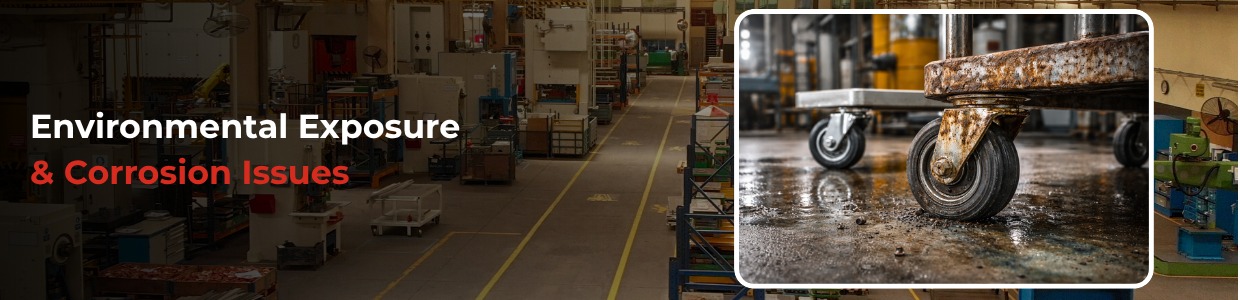
Industrial environments often expose castor wheels to harsh operating conditions, including moisture, chemicals, temperature fluctuations, and abrasive contaminants. Over time, these factors can significantly impact the structural integrity and performance of castor components, particularly when adequate protective measures are not in place. Corrosion is one of the most common and damaging outcomes of environmental exposure, leading to weakened materials, restricted movement, and increased risk of sudden failure.
Moisture and humidity can cause metal components such as mounting plates, bearings, and brackets to rust, reducing their load-bearing capacity. In environments where chemicals or cleaning agents are present, corrosion can accelerate, breaking down protective coatings and damaging internal components. Temperature variations also play a role, as expansion and contraction can weaken materials and affect wheel performance. These factors collectively reduce the lifespan of castor wheels and increase maintenance requirements.
Corroded components not only affect durability but also compromise mobility. Bearings may seize, wheels may lose smooth rotation, and structural parts may weaken, creating instability during movement. In critical applications such as healthcare facilities, food processing units, and manufacturing plants, such failures can disrupt operations and pose safety risks.
Rexello addresses these challenges by manufacturing solutions such as corrosion-resistant castor wheels for industrial environments, stainless steel castor wheels for moisture-prone areas, polyurethane castor wheels with chemical resistance, and heavy duty industrial castor wheels with protective coatings. These products are designed to maintain performance even in demanding and corrosive conditions.
By selecting castor wheels with appropriate material composition and protective finishes, businesses can significantly reduce the impact of environmental exposure. This ensures consistent performance, minimizes maintenance, and extends the operational life of mobility systems across diverse industrial applications.
Preventive Measures for Long-Term Castor Performance
Preventing castor wheel failure begins with selecting the right wheel configuration based on application-specific requirements such as load capacity, floor conditions, movement frequency, and environmental exposure. Many operational issues arise not from poor product quality, but from mismatched specifications. Choosing the correct wheel diameter, material, and mounting type ensures optimal performance from the start and reduces the risk of premature wear or failure.
Regular inspection is equally important in maintaining long-term performance. Industrial castor wheels operate under continuous stress, and over time, components such as bearings, wheels, and mounting plates can show signs of wear. Identifying issues early—such as cracks, flat spots, or reduced rotation—allows for timely intervention before a complete breakdown occurs. Preventive maintenance schedules help minimize unexpected downtime and extend the life of mobility systems.
Proper load distribution is another key factor in ensuring durability. Uneven weight placement increases strain on individual castors, accelerating wear and reducing overall efficiency. Ensuring balanced load distribution across all wheels improves maneuverability and reduces structural stress on equipment.
Rexello supports these requirements by offering solutions such as heavy duty industrial castor wheels for long-term use, polyurethane castor wheels for durability and floor protection, nylon castor wheels for high load applications, and swivel castor wheels for flexible movement control. These products are engineered to meet diverse industrial demands while maintaining consistent performance.
Partnering with an experienced manufacturer ensures access to technical expertise, proper product selection, and ongoing support. With the right preventive measures in place, businesses can significantly enhance reliability, reduce maintenance costs, and achieve long-term operational efficiency.
Impact of Floor Conditions on Castor Wheel Performance
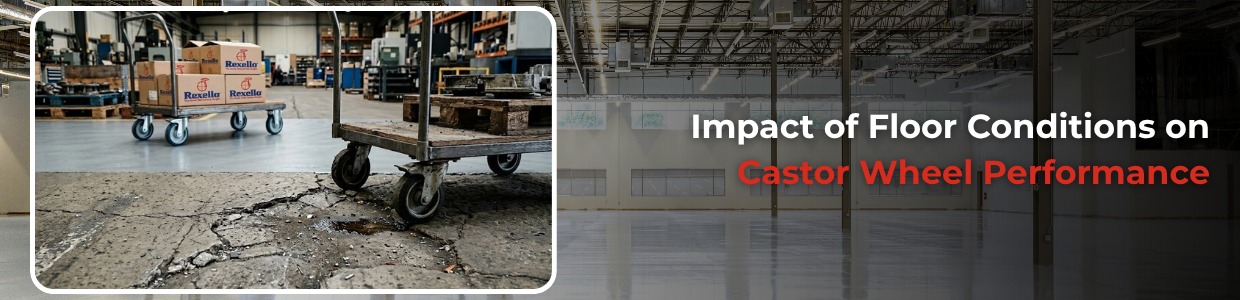
Floor conditions play a crucial role in determining the performance and lifespan of castor wheels in industrial environments. Uneven surfaces, cracks, debris, and abrasive flooring can significantly increase stress on wheels, leading to faster wear and reduced efficiency. In facilities where movement is continuous, poor floor quality not only affects castor durability but also increases rolling resistance, making it harder to transport heavy loads.
Hard and rough surfaces tend to wear down softer wheel materials quickly, while smooth floors may require materials that provide sufficient grip to prevent slipping. Additionally, obstacles such as metal scraps, dust accumulation, or liquid spills can interfere with wheel rotation and damage bearings. Over time, these factors contribute to vibration, noise, and instability in movement.
Selecting the right castor wheels based on floor conditions is essential for maintaining performance. Rexello offers solutions such as polyurethane castor wheels for smooth and floor-friendly movement, nylon castor wheels for hard industrial surfaces, rubber castor wheels for shock absorption, and heavy duty castor wheels for rough environments. These options ensure compatibility with different floor types while reducing wear and improving mobility.
By maintaining clean and even flooring and selecting appropriate wheel materials, businesses can significantly enhance castor performance, reduce maintenance costs, and ensure safer material handling operations.
Importance of Regular Maintenance and Inspection
Regular maintenance is a critical factor in ensuring the longevity and reliability of castor wheels in industrial applications. Despite being robust components, castors are subjected to continuous load, movement, and environmental exposure, making periodic inspection essential to identify early signs of wear and prevent unexpected failures.
Routine checks should include inspecting wheel surfaces for cracks, flat spots, or excessive wear, as well as ensuring that bearings rotate smoothly without noise or resistance. Mounting plates and fasteners should also be examined for tightness and alignment to prevent structural instability. Ignoring these signs can lead to sudden breakdowns, causing operational disruptions and increased repair costs.
Lubrication plays a vital role in maintaining bearing efficiency and reducing friction. Proper lubrication schedules help extend component life and ensure smooth movement, especially in high-load and high-frequency applications. Additionally, replacing worn-out components at the right time prevents damage to other parts of the castor assembly.
Rexello supports maintenance efficiency by offering industrial castor wheels with long service life, double bearing castor wheels for reduced friction, heavy duty castor wheels for continuous operations, and corrosion-resistant castor wheels for low maintenance requirements. These features help minimize maintenance efforts while ensuring consistent performance.
Implementing a structured maintenance plan not only improves operational efficiency but also enhances safety, reduces downtime, and maximizes the return on investment in industrial mobility systems.

Call to Action
Preventing castor wheel failures starts with choosing the right mobility solution. Rexello manufactures industrial castor wheels and trolley systems designed for durability, safety, and long-term performance. If your facility faces frequent mobility issues or requires guidance on selecting the right castor wheels, connect with Rexello for expert support and reliable industrial solutions.
📧 info@rexello.com
📞 +91-79001 47477
🌐 www.rexello.com
FAQ’s :-
Q1: What is the most common reason for castor wheel failure in industrial applications?
A1: Overloading and uneven load distribution are the most common causes of castor wheel failure in heavy industrial environments.
Q2: How can castor wheel wear be reduced in demanding facilities?
A2: Selecting the correct wheel material and ensuring proper load capacity significantly reduces wear and extends service life.
Q3: Do bearings require regular maintenance in heavy-duty castor wheels?
A3: Bearings generally require minimal maintenance, but periodic inspection helps prevent rolling resistance and performance issues.
Q4: Can corrosion affect castor wheel performance?
A4: Yes, corrosion can weaken components and restrict movement, making corrosion-resistant materials essential in harsh environments.