Industrial trolleys play an essential role in factories, warehouses, workshops, hospitals, logistics centres, retail facilities, and manufacturing plants. They allow employees to transport products, machinery, raw materials, tools, and finished goods safely and efficiently. However, continuous movement, heavy loads, uneven surfaces, chemicals, dust, and moisture can gradually affect the trolley’s structural strength and mobility.
Regular industrial trolley maintenance helps prevent unexpected breakdowns, improves workplace safety, and extends the usable life of the equipment. Rexello provides different mobility solutions, including platform trolleys, trolley wheels, swivel castors, fixed castors, braked castors, and heavy-duty castors for different load and application requirements.
Clean Today, Perform Better Tomorrow
Cleaning is one of the simplest yet most effective industrial trolley maintenance tips. Dust, metal particles, packaging material, grease, threads, and industrial debris can collect around the wheel axle, bearing, castor fork, and trolley platform. When this buildup is ignored, it can restrict wheel rotation and make the trolley increasingly difficult to move.
The trolley platform should be cleaned after every major use, especially when it carries chemicals, oils, food products, construction material, or manufacturing components. Use a suitable cleaning solution based on the trolley material and working environment. Avoid using aggressive chemicals that may damage the paint, rubber tread, polyurethane surface, or protective coating.
Pay close attention to the trolley wheels and castor assemblies during cleaning. Remove tangled threads, plastic strips, wires, and other objects from the wheel area. Clean wheels move more smoothly, reduce unnecessary strain on operators, and support the efficient performance of material handling trolleys across busy industrial facilities.
Give Your Castor Wheels a Regular Health Check
The Performance of an industrial trolley depends heavily on its castor wheels. Even when the trolley frame remains strong, damaged or poorly aligned castors can cause vibration, wobbling, uneven movement, and steering difficulties. Maintenance teams should inspect every wheel for cracks, flat spots, tread separation, unusual wear, and visible deformation.
Rotate each wheel manually and listen for grinding, clicking, or scraping sounds. These noises can indicate bearing damage, internal contamination, insufficient lubrication, or an incorrectly fitted wheel. Swivel castors should turn freely without excessive sideways movement, while fixed castors should remain correctly aligned with the trolley frame.
Worn-out wheels should be replaced before they completely fail during operation. Businesses can obtain wheel selection support, technical advice, and application-focused guidance when choosing replacement rubber wheels, nylon wheels, polyurethane castor wheels, or heavy-duty castors. Selecting the correct replacement helps restore safe and controlled trolley movement.
Lubricate the Parts That Keep Operations Moving
Lubrication reduces friction between moving components and helps castors rotate and swivel without unnecessary resistance. Bearings, axle points, swivel raceways, hinges, and other movable joints should be lubricated according to the trolley’s usage frequency and operating environment. Equipment used continuously may require more frequent attention than occasionally operated trolleys.
Before applying lubricant, clean the component properly so that dust and debris are not pushed deeper into the bearing. Use the lubricant recommended for the wheel, bearing, and application. Applying too much lubricant can attract dirt, while using the wrong product may affect wheel materials or create problems in hygiene-sensitive environments.
A properly lubricated trolley requires less physical effort from the operator and provides better directional control. Regular lubrication also supports longer bearing life and lowers the possibility of wheel seizure. For specialised applications, professional technical advice can help businesses establish the correct lubrication process for their industrial castors and wheels.
Respect Load Limits Before the Trolley Protests
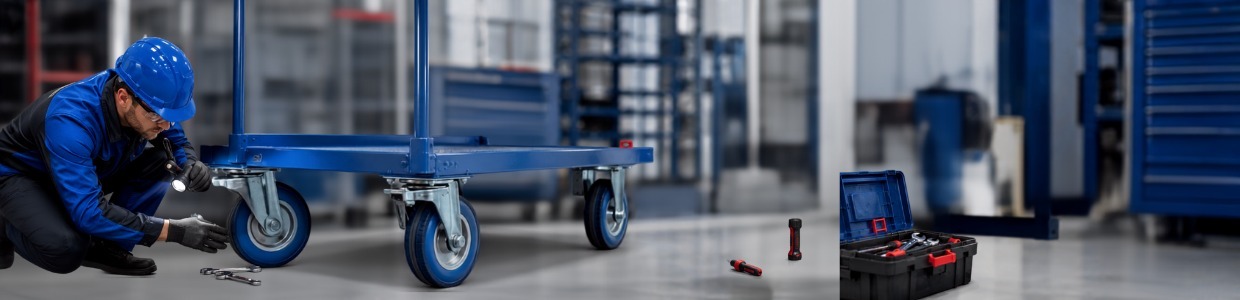
Every trolley is designed to carry a specific amount of weight. Repeatedly exceeding its rated capacity can bend the platform, damage the handle, deform the castor brackets, and place excessive pressure on the wheels and bearings. Overloading can also make the trolley unstable, particularly while turning, stopping, or moving across ramps.
Operators should consider the total load as well as its distribution. Heavy material concentrated on one side can overload individual wheels even when the overall weight appears acceptable. The load should be placed evenly across the trolley platform, with heavier objects positioned close to the centre whenever possible.
The trolley must also be matched to the actual application. Standard equipment may not be suitable for machinery, industrial dies, metal components, or continuous high-load movement. Applications involving demanding weights should use properly selected heavy-duty castors, super heavy-duty castors, and engineered material handling solutions rather than relying on an underspecified trolley.
Tighten Every Connection Before It Becomes a Problem
Constant movement creates vibration, and vibration can gradually loosen nuts, bolts, fasteners, wheel plates, handles, shelves, and frame connections. Loose components may initially produce only minor rattling, but continued use can lead to instability, misalignment, structural damage, or complete component separation.
Maintenance teams should inspect all fasteners at planned intervals and tighten them using the correct tools. Special attention should be given to the castor mounting plate because a loose mounting connection affects steering and load distribution. Bolts should be tightened evenly rather than excessively, as overtightening may damage threads or deform mounting surfaces.
Welded joints should also be checked for cracks, corrosion, or separation. A damaged weld should be repaired by a qualified professional before the trolley returns to operation. Consistent inspection of the trolley frame, handle, platform, and castor wheel assemblies helps identify minor problems before they develop into expensive equipment failures.
Match the Wheel Material to the Working Environment
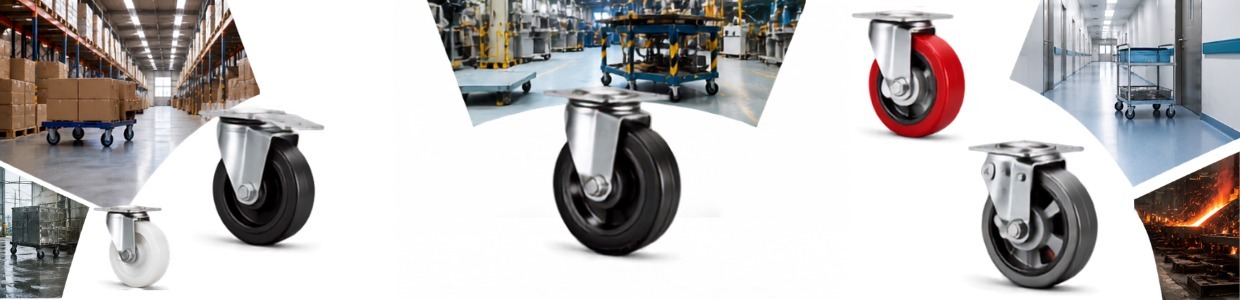
Different trolley wheel materials perform differently depending on the floor, load, temperature, noise level, chemicals, and operating conditions. A wheel that performs effectively in a warehouse may not be suitable for a furnace area, hospital corridor, outdoor loading bay, food facility, or chemical processing environment.
Polyurethane castor wheels are often chosen where durability, floor protection, and relatively quiet operation are important. Rubber wheels can provide grip and shock absorption, while nylon wheels may be appropriate for clean or chemical-sensitive applications. Cast iron wheels can support demanding industrial conditions where floor protection and noise are less important. Rexello offers multiple wheel materials and bearing configurations for industrial applications.
During maintenance, verify whether the installed wheel material continues to suit the application. Changes in floor conditions, operating temperature, load, or usage frequency may require a different solution. Professional product application support and custom castor wheel solutions can help identify the right wheel based on real operating conditions.
Stop Corrosion Before It Weakens the Trolley
Industrial trolleys may be exposed to water, humidity, cleaning chemicals, salts, outdoor conditions, and corrosive substances. These elements can damage the frame, wheel brackets, fasteners, bearings, and mounting plates. Corrosion should never be treated as a cosmetic issue because it can gradually reduce structural strength.
Inspect painted and coated surfaces for scratches, chips, bubbling, and exposed metal. Small damaged areas should be cleaned and treated before rust spreads beneath the protective finish. After washing the trolley, dry it thoroughly and avoid leaving moisture around joints, bearings, fasteners, or enclosed frame sections.
Facilities operating in wet, marine, medical, pharmaceutical, food-processing, or chemical environments may require corrosion-resistant finishes or stainless-steel components. The right industrial trolley manufacturers or castor wheel suppliers can recommend suitable materials and protective configurations based on environmental exposure, cleaning procedures, and hygiene requirements.
Turn Maintenance Into a Planned Routine
Maintenance becomes more effective when it follows a documented schedule rather than depending on visible damage. Create a trolley inspection routine based on load, operating hours, floor condition, movement frequency, and environmental exposure. Frequently used equipment should be checked more often than backup or occasionally operated trolleys.
Maintain a simple service record containing inspection dates, observed problems, lubrication activity, replaced wheels, structural repairs, and operator complaints. These records help maintenance teams identify recurring failures and determine whether the trolley is correctly specified for its task. Repeated wheel damage may indicate overloading, unsuitable wheel material, poor floor conditions, or incorrect castor selection.
Employees should also be encouraged to report steering difficulties, unusual sounds, vibration, braking problems, and frame instability immediately. Combining operator feedback with scheduled maintenance reduces unplanned downtime. Expert technical advice, wheel selection support, and dependable replacement components can further improve the reliability of platform trolleys and other industrial mobility equipment.
Keep Your Industrial Trolleys Moving with Rexello
Keep your material handling equipment dependable with expert guidance and durable mobility components from Rexello. From platform trolleys and replacement trolley wheels to heavy-duty castors and application-based wheel selection, our team can help improve safety, movement, and service life. Discuss your maintenance or replacement requirements today and reduce avoidable downtime across warehouses, factories, workshops, and logistics facilities. 📞 Call: +91 7900147477 📧 Email: info@rexello.com 🌐 Website: https://rexello.com/ for reliable industrial mobility solutions.
Frequently Asked Questions
Q1. How frequently should industrial trolleys be inspected?
A1. Frequently used trolleys should receive quick visual checks before operation and a detailed maintenance inspection at planned intervals based on load and working conditions.
Q2. When should trolley wheels be replaced?
A2. Replace trolley wheels when they develop cracks, flat spots, excessive tread wear, bearing noise, wobbling, or difficulty rotating and swivelling.
Q3. Can the same castor wheels be used on every floor?
A3. No. Wheel material should be selected according to the floor surface, load, noise restrictions, temperature, chemicals, and required manoeuvrability.
Q4. Why does an industrial trolley become difficult to push?
A4. Common reasons include overloaded platforms, damaged bearings, debris around axles, poor lubrication, misaligned castors, unsuitable wheels, or uneven load distribution.